Showing posts with label Wildflowers. Show all posts

Tuesday, May 26, 2015

I'm here singing in the rain


We are getting a precious lot of rain here in Central Texas.
I don't believe I remember in all my days getting a constant daily flow of rain like this in my part of the world.
We are grateful and take it as it comes.
However, our prayers are with those who are lost and have lost property.


In the meantime, I have almost finished a Garden Palace project that I am so excited about. 

My table project is almost finished.
It came to me in parts so getting the legs bolted onto the top Sunday gave me the most joyous feeling. 


When I received the table, the veener was all peeled off. 
All that remained was little bits still stuck with the veener glue. 


Before attaching the legs, I painted them with chalk paint and used a dark wax. 
I am painting the top and will share again when I finish. 
I must say I do like it just as it is but I'm sticking with my original plan to paint it. 
I'm sure I will like that too.

Parting Shot

And here is a parting shot through the glass of the back door.
I just love these reflections of the trees on the wall and the wildflowers around the rug. 
♥

Saturday, October 25, 2014

Last post on Texas Native Plant week

This will be my last post recognizing and celebrating Texas Native Plant Week, October 19 - 25. 
Today, it is all about the unknown.
The unidentified.
I will give some of my observations about these native plants that I have yet to identify.

This one has beautiful gray-green soft color which I really like.
It is pubescent, meaning covered with hairs and is nice to touch. 
I fear it is a very prolific and probably on the farmers' dreaded noxious weed list.
Nevertheless, I will add one to my near-the-house gardens.

This unknown looks a lot like a Heuchera.
I see it growing low to the ground but that could be because the ones that I have observed are in areas that are mowed. 
I really like the leaf shape and coloration and plan to use it as a ground cover in shady areas.
Although, I have seen it in full sun as well. 
I don't remember seeing it bloom; however, it may bloom in spring.
I will be watching.

This one again.
I love this plant.
It grows as tall and taller than me.
At daylight, I'm going out to see if any of these seed heads remain. 
I have been seeing the birds working this area.
It is a beautiful plant that has rust color during it's peak and then as it begins to die, it all turns rust as you can see in the background of this photo. 

If left to grow, in other words, not in the mower's path, this unknown has a very desirable branching habit.
I think it could be grown as a small hedge. 
I do remember seeing it in bloom and I think it is a violet-purplish color.
I will have to wait until spring for the blooms and then I should be able to identify it.

This unknown with a small yellow flower is a bogsy type plant. 
It pops up near the edge of the water each year. 
It is growing in an area that is under water when the tank is full. 

This is a nice little shade loving shrubby plant.
It grows from runners underground. 
Sometimes I love it and sometimes I don't 
I think I'm back to the lovin it stage.

 I forgot that it made this little berry-fruit-seeds.
Because not all of them have these. 
This might be clue to identifying this native.

♥

Friday, October 24, 2014

Yes another native plant


In 2009, the Texas legislature designated the third week in October as Texas Native Plant Week.

Today I celebrate Inland Sea Oats growing in the wild here on my property.

Inland Sea Oats (08/29/2014)
 This native plant is not about the flowers. 
It is all about the beautiful seed heads dangling from the long arching branches. 
Inland Sea Oats (10/21/2014)
 I have lots of them and have plans to bring some up into the gardens near the house. 
Inland Sea Oats in the wild

The following is from the Native Plant Database at the Lady Bird Johnson Wildflower Center:

Chasmanthium latifolium

Chasmanthium latifolium (Michx.) Yates

Inland sea oats, Indian wood oats, Wild oats, River oats, Flathead oats, Upland Oats, Upland Sea Oats

Poaceae (Grass Family)

Synonym(s): Uniola latifolia

USDA Symbol: CHLA5

USDA Native Status: L48 (N)

This is a 2-4 ft., clump-forming, perennial grass bearing large, drooping, oat-like flower spikelets from slender, arching branches. The blue-green, bamboo-like leaves often turn a bright yellow-gold, especially in sunnier sites, in fall.
Very popular as a low-maintenance shade grass, Inland sea oats is notable for its large, graceful seedheads. Sending up blue-green basal leaves in earliest spring, it can be 2 feet tall and a vivid green by May, with translucent green seedheads swaying in the breeze. By mid-summer, the seeds will have turned an attractive ivory and will turn brown in a few months before dropping off. It passes through most of winter a soft brown, but becomes tattered and gray by February, a good time to cut it back to the basal rosette. It reseeds easily and can expand aggressively within a couple of years, making a solid mat in moist loams. It has been used to prevent soil erosion along streams. The seed stalks are attractive inflower arrangements.
Inland Sea Oats Flower Spikelets

Inland Sea Oats Flower Spikelets

Inland Sea Oats Flower Spikelets

Inland Sea Oats Flower Spikelets and seeds
One of the things about this native plant that I really do love is the bamboo like leaves and the drooping arching branches.
Oh, that's two things. 
But most of all I love the seed heads.
I had to investigate.
One seed can be found wrapped inside each little paper-like husk.
So you know, the grid is ¼ inch.
I will probably transplant some and try planting seeds too. 
♥

Wednesday, October 22, 2014

Celabrating Texas Native Plant Week with Thoroughwort

Recognizing Texas Native Plant Week
October 19-25
Thoroughwort, Fleischmannia incarnata
showing the branching growth habit
I was extremely excited Monday when I discovered for the first time this native plant growing here.
I was making my rounds, as I do, around behind the tank dam.
The beautiful plant was down at feet level and I was ignoring it as I thought it was yet more asters. 
I guess it has been here all along as I do now recognize the leaves. 
And actually it is in the aster family of plants. 
Thoroughwort, Fleischmannia incarnata
showing the branching growth habit
I love the low branching growth habit and look forward to moving some of this to a shaded bed near the house. 
It is a perennial. 
I have tentatively identified it as Fleischmannia incarnata.
Thoroughwort 
I only found two plants when I discovered it Monday.

Then Tuesday when I went out with my real camera, I walked around with an eye for it and sure enough discovered many more in another area. 
This one is at the edge of where I mow and obviously was mowed recently. I think it will be an excellent specimen to transplant.
dried Thoroughwort flower head
I have more research in order to learn more about this Thoroughwort.
However, I brought a branch to the house to help me identify it and the next day the branch had dried and revealed a few of its secrets.  

dried Thoroughwort flower head
I could not see this detail nor even the pinkish color with the necked eye or even with my reading glasses.
dried Thoroughwort flower head
dried Thoroughwort flower head showing seeds
FYI, the grid that I photographed on is ¼ inch. Therefore the branch consisting of four or five flower heads is one inch.
I broke apart one flower head to see the seeds.
As you can see, they have a little whorl that carries them off. 
Another of Mother nature's genius.

This post is to celebrate the Texas Native Plant Week, October 19-25. 

I will probably have more. 
Hope you enjoy. 
♥

Tuesday, October 21, 2014

Texas Native Plant Week

When I posted Native Wildflowers Around Me last week, I had no idea this week, October 19-25, is Texas Native Plant Week dedicated to celebrating home-grown native plants.
Today, I will celebrate the Asters that grow on our property.


I can't say they are "home-grown".
I would say they are native to the property and are just here without my say-so. 
There are a bazillion different wild asters and I haven't a clue which one these are. 


What I have learned about taking pics with my iphone is that the iphone doesn't do such a good job for me on these wild plants.
There is always a bit of a breeze when I'm out and the camera has a hard time focusing on the plant I'm looking at.
Also, as you can see, there are usually layers of plants that confuse the lens. 
Even if there is not a breeze, my Stupid Kitty is always following me around like a dog and manages to put the plants in motion.
These first three pictures are from the same clump that is growing near the tank behind the greenhouse.
I love the heavy dew that I captured this morning with my point-and-shoot.  

 This clump is actually here near the house in an overgrown flower bed. 
That's just fine with me because I am about to turn many areas near the house into native plant beds.


This is a different aster that was in bloom in mid September and it is erect and about 5 feet tall.
The blooms look like they are drying and very tiny at about 1/4 inch wide.

I discovered the celebration of Texas Native Plant Week from some gardening blogs that I read. 
One is My Gardener Says... and you might want to click over and read her post. 

I'll be back with more before the week is over. 
♥

Thursday, October 16, 2014

Native wildflowers around me

Goldenrod
 I am surrounded by nature's beauty. 
Early Fall is just as vibrant as spring here in my part of Texas. 
I swoon over the goldenrod which as you can see grows taller than me.
Partridge Pea
 And the partridge pea captivates me. 
Though you cannot see the little yellow flower so good because of the focus, do note the seed pods. 
I planned all summer to collect seeds pods as the partridge pea is an annual and I want to incorporate some in the gardens nearer to the house. 
I was successful but as the pod ripens, it twists open and flings the seeds. 
Don't you love natures secrets.  
Rough-leaf Dogwood
 Rough-leaf dogwood is an understory tree that has beautiful creamy-white flowers and then white berry fruit in the spring and I am so tempted to plant some in my yard gardens but I know from watching it grow wild here on my acreage that it can take over and I fear I might regret its rampant spreading from underground shoots.  
Ladies' Tresses
 Ladies Tresses is a small erect orchid that is supposedly rare here in my county but I have recorded its presence as far back as May 1999. 
The white flowers are spirally arranged and according to, Wildflowers of Texas Hill Country by Marshall Enquist, "they are next to impossible to transplant". I would love to try but may not bother them. 
The problem is they grow in a mowed area. 
Unknown 
 I am unsure what this plant is but I do love it. I think it may be a type of Amaranth but haven't been able to identify it. 
I love the rust color on the stems and the way the flower head hangs. It grows taller than me.
White Boneset
 Another beautiful tall plant that is used in native gardens. 
Low Wild Petunia
 How can you not love this? 
Well, all I can tell you, it is a self-seeding perennial that you can not just pull up to remove. The root system is such that you must dig to get rid of it.
Fox-glove
 The fox-glove were beautiful this year.
Western Ironweed

American Beautyberry
 The birds devour these seeds and you'll miss seeing them if they find them first. 
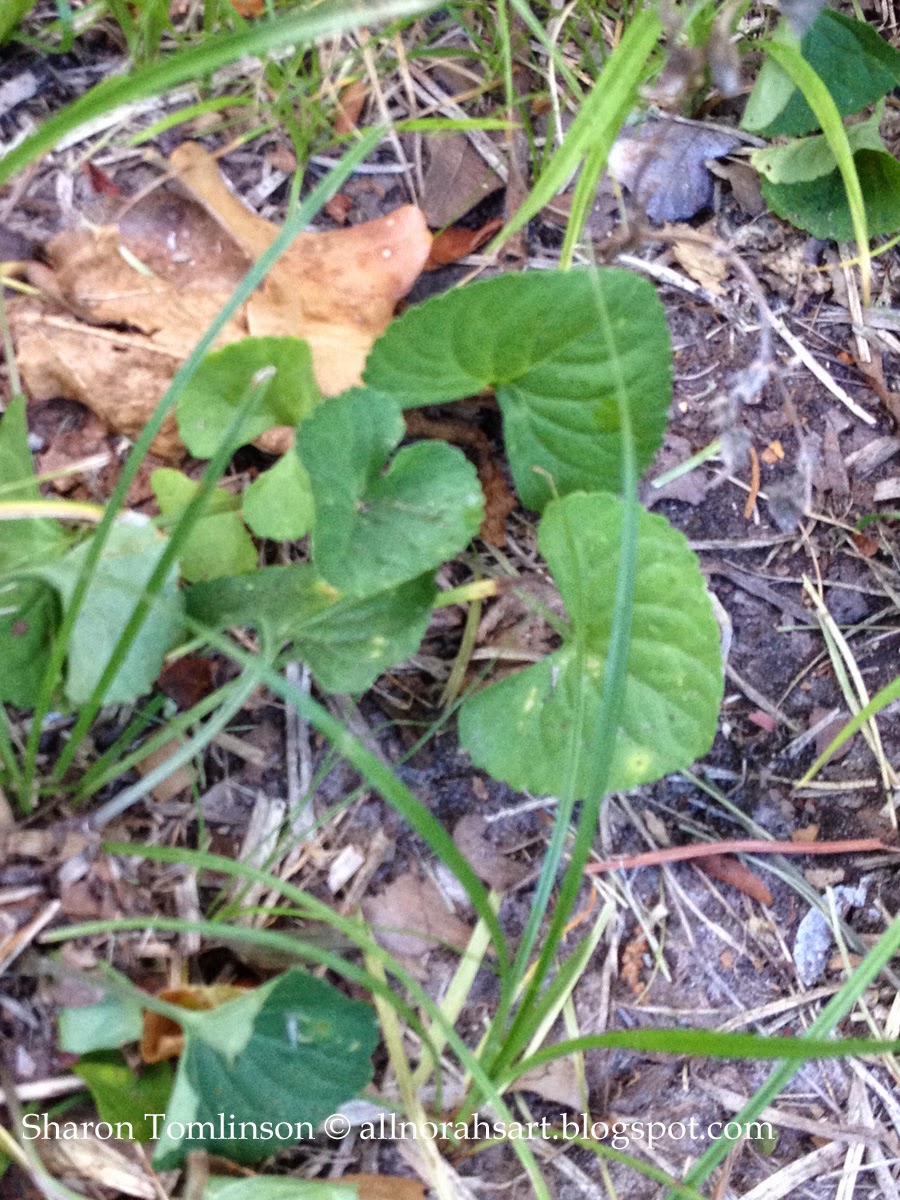
Wild Violet
The violets aren't in bloom now but I do have a nice stand of them down near the creek.

I have been trying to photo and document the native plants growing right here because there are so many. 
Most of the photos are from mid September.
I can enjoy them where they are but I do have plans to bring some closer to me.

Hope you are enjoying your fall gardens as I am.